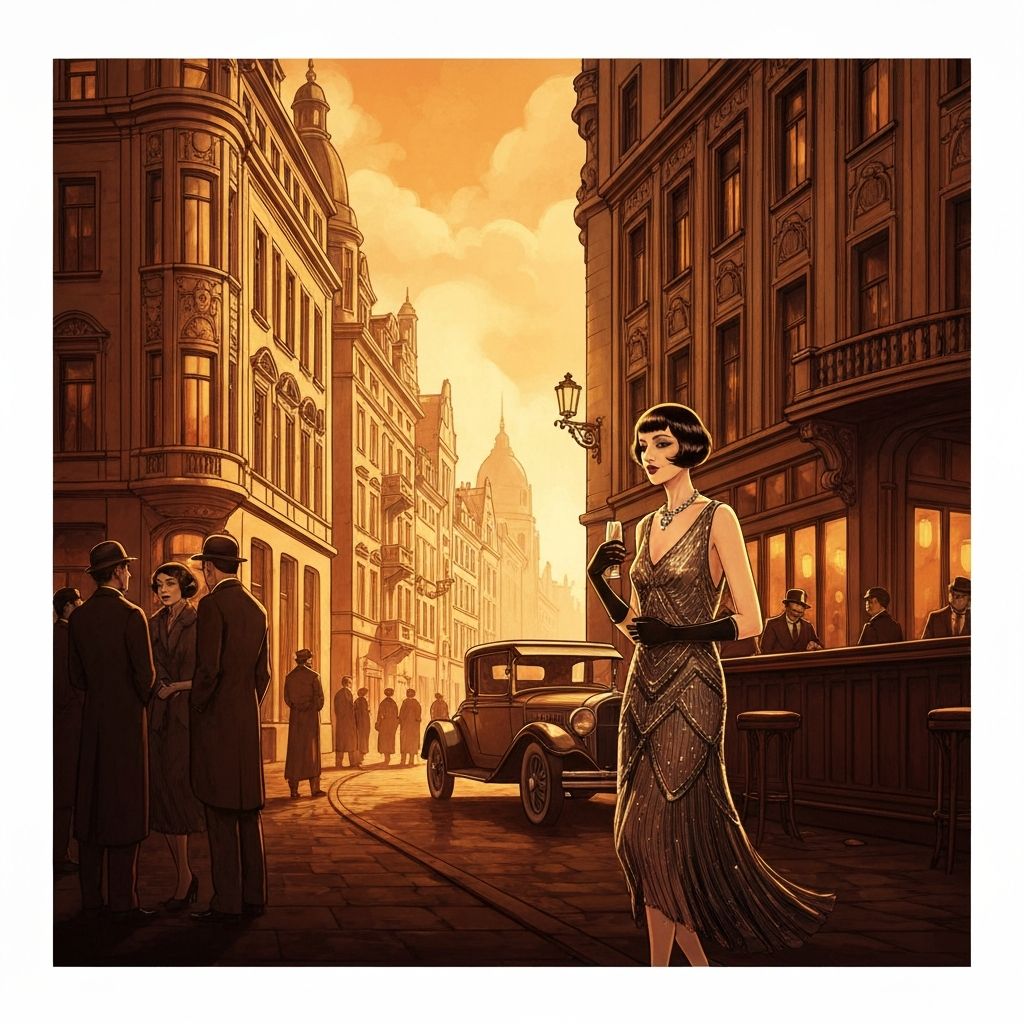
1918–1939: The Interwar Period
Period between WWI and WWII. Post-war trauma and relief, rapid social change, economic instability, cultural experimentation (Modernism, Jazz Age), political extremism, and the looming threat of another war.
The Great War (1914–1918)
- Devastating loss of life: entire generation of young men killed (Battle of the Somme: 1 million casualties)
- Psychological trauma: shell shock (PTSD), survivor guilt, disillusionment
- Loss of father figures: impact on generation too young to fight
- End of innocence: pre-war optimism shattered
- Questioning of authority: traditional values, religion, patriotism challenged
Social Changes
- Class structures began shifting: aristocratic estates sold
- Women’s roles changed: factory work, ambulance driving during war
- Urbanisation accelerated: traditional rural life declining
Literary Impact
- War poetry: Owen, Sassoon — exposed war’s horror
- “Lost Generation”: writers/artists traumatised by war
- Modernism flourished: rejection of pre-war certainties
Jazz Age
- Reaction against WWI’s horrors and constraints
- Youth culture: rebellion, excess, freedom
- Flappers: bobbed hair, short skirts, smoking, drinking
- Cultural icon: Fitzgerald’s The Great Gatsby (1925)
- Speakeasies during American Prohibition (1919–1933)
Bright Young Things (British)
- Bohemian young aristocrats and socialites in London
- Elaborate parties, treasure hunts, heavy drinking, drugs
- Media coverage: gossip columns, high-society celebrities
- Represented in Evelyn Waugh’s Vile Bodies (1930)
Economic Crisis
- Brief boom 1919–1920, then slump
- Wall Street Crash (October 1929): worldwide depression
- Great Depression (1930s): unemployment peaked at 22% in 1932
- Hunger marches, Jarrow March (1936), General Strike (1926)
- No welfare state yet (introduced 1945; NHS 1948)
Women's Changing Roles
- Suffrage achieved: women over 30 voted 1918; equal 1928
- “Odd women”: surplus of unmarried women after WWI casualties
- Tension between new freedoms and traditional expectations
- Flappers represented rebellion against Victorian restrictions
- Still faced discrimination, lower pay, limited opportunities
Italy
- Mussolini: founded fascism, dictator 1922–1943
- Constitutional rule until 1925, then dictatorship
Germany
- Hitler: Chancellor 1933, Führer 1934
- Anti-Semitism, territorial expansion, totalitarianism
Spain & Britain
- Spanish Civil War (1936–1939): Franco’s fascist victory
- Britain: appeasement policy, Chamberlain’s “Peace in our time” (1938)
- Appeasement failed: WWII began September 1939
Modernism
Rejection of traditions; experimental forms; stream of consciousness, fragmentation, non-linear narratives. Influenced by Freud, WWI trauma, urbanisation, technology.
Characteristics: Fragmentation, stream of consciousness, subjectivity, allusion, unconventional syntax/punctuation
Key Modernist Authors
- Virginia Woolf: Mrs Dalloway (1925), To the Lighthouse (1927) — stream of consciousness
- James Joyce: Ulysses (1922) — extreme experimentation
- D.H. Lawrence: Lady Chatterley’s Lover (1928) — sexuality, class
- Aldous Huxley: Brave New World (1932) — dystopian
- Evelyn Waugh: Vile Bodies (1930) — satirical, Bright Young Things
- F. Scott Fitzgerald: The Great Gatsby (1925) — American Dream
- George Orwell: Down and Out in Paris and London (1933) — social realism
Prose Techniques to Recognise