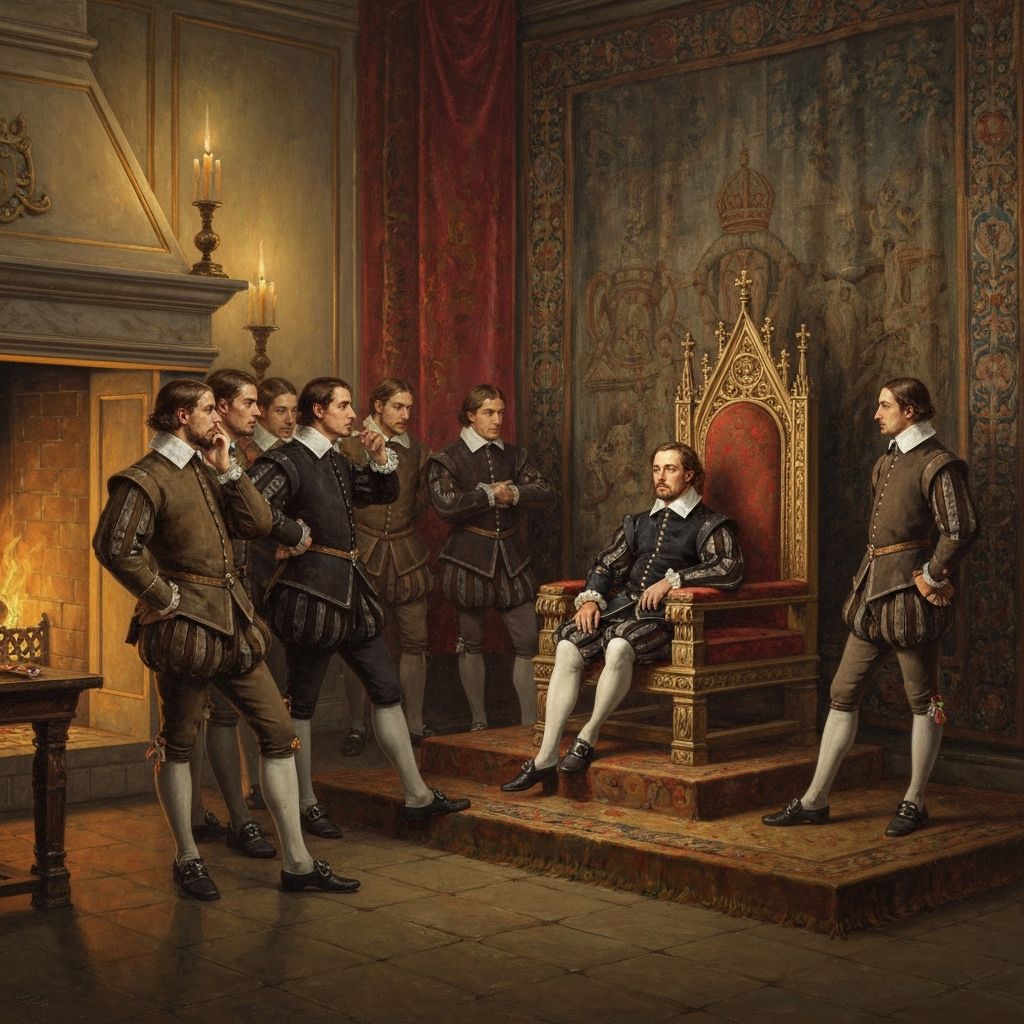
Contexts & Productions
The historical, religious, philosophical, and cultural world of Shakespeare's Hamlet -- and how 400 years of performance have shaped its meaning.
Hamlet was written c.1599-1601 at a pivotal moment between the Elizabethan and Jacobean eras. Shakespeare drew on the Amleth legend (Saxo Grammaticus), a lost play known as the Ur-Hamlet, and possibly his own grief after the death of his son Hamnet (1596). The play exists in three early texts -- the "bad" First Quarto (1603), the authoritative Second Quarto (1604), and the theatrical First Folio (1623) -- and modern editions conflate Q2 and F1.
Understanding the political anxieties (succession, regicide, court surveillance), religious conflicts (Protestant/Catholic, Purgatory, damnation), philosophical currents (humanism, skepticism, melancholy), and social structures (gender, revenge culture, honor) that shaped the play is essential for AO3. Equally, exploring how different productions and critical readings have interpreted Hamlet across four centuries provides the interpretive range demanded by AO5.