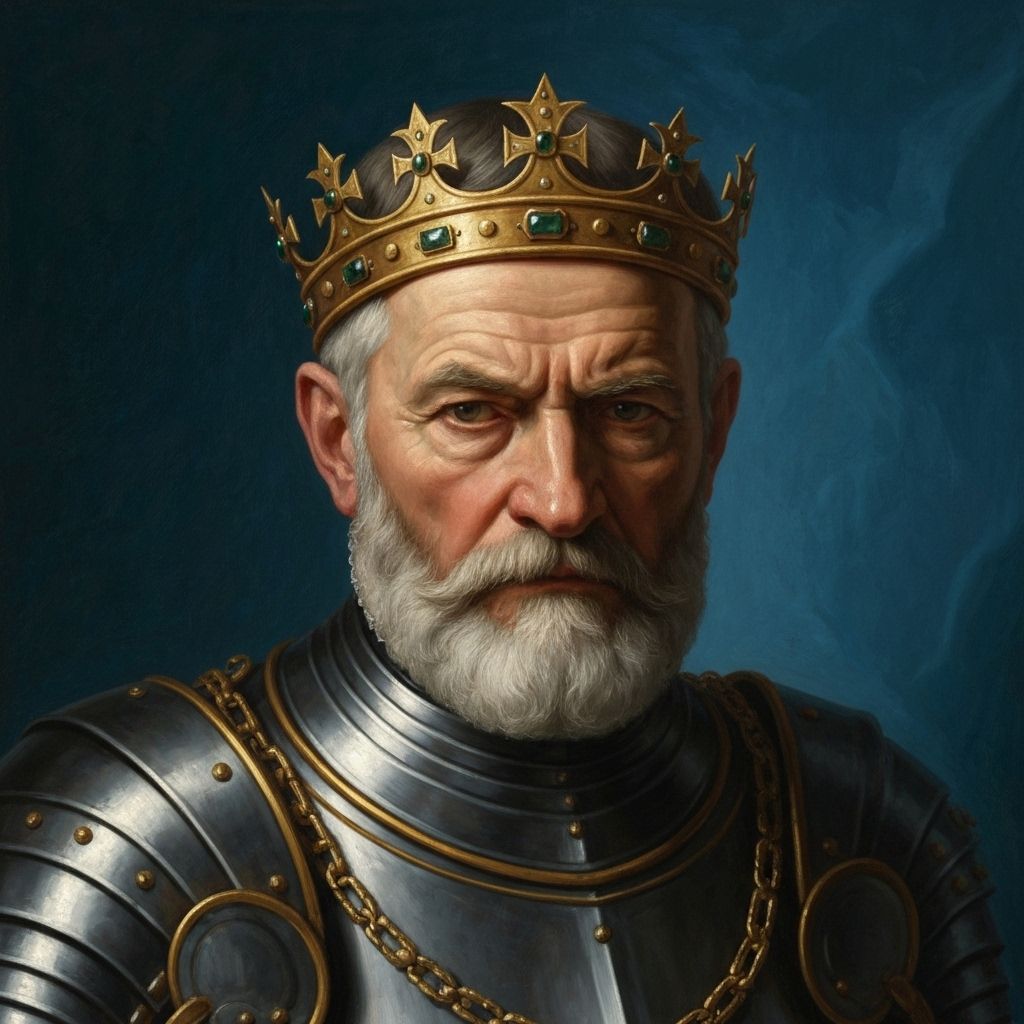
King Fortinbras
Former King of NorwayThe late King of Norway, father of young Fortinbras, slain in single combat by King Hamlet.
King Fortinbras Character Analysis Summary
King Fortinbras never appears in the play, yet his death at the hands of King Hamlet sets in motion the parallel revenge plot that mirrors Hamlet's own quest. His absence creates a structural symmetry - both young princes seek to avenge their fathers and restore family honor, though through vastly different means.
Old Fortinbras represents the medieval ideal of the warrior-king who settles disputes through personal combat rather than political intrigue. His willingness to stake his kingdom on single combat with King Hamlet reflects an older, more straightforward code of honor that contrasts with the duplicitous politics of Claudius's Denmark.
The lands that Old Fortinbras lost to King Hamlet in their duel become a symbol of Norwegian honor that must be restored. His defeat creates the political tension that drives young Fortinbras's military ambitions, showing how the actions of one generation create obligations and conflicts for the next.
Both Old Fortinbras and King Hamlet were warrior-kings who resolved their territorial disputes through honorable single combat, representing a dying breed of medieval chivalry. Their mutual respect and adherence to martial codes contrasts sharply with Claudius's cowardly murder by poison, highlighting the moral decline from one generation to the next.
Old Fortinbras's death in combat demonstrates both the nobility and the cost of the warrior ethos. While his willingness to fight personally for his kingdom shows courage and honor, his death leaves Norway weakened and his son burning for revenge, illustrating how martial values can perpetuate cycles of violence across generations.
Unlike the questionable succession in Denmark, Old Fortinbras appears to have ruled Norway legitimately and passed his claim to his son through proper channels. His legitimate authority makes young Fortinbras's eventual claim to the Danish throne more acceptable than Claudius's usurpation, suggesting that rightful succession matters even in death.
The formal agreement between Old Fortinbras and King Hamlet - wagering lands on the outcome of their duel - represents a world where honor and contracts were sacred. This binding agreement creates legal and moral obligations that outlive both combatants, showing how the past continues to shape the present through formal commitments.
Old Fortinbras's defeat and death create a burden of shame and obligation for his son that parallels the Ghost's demands on Hamlet. Both fathers leave their sons with missions of restoration - one through revenge, the other through military conquest - demonstrating how paternal expectations can become crushing psychological burdens.
King Fortinbras represents the passing of an older, more straightforward political order based on personal combat and clear codes of honor. His death marks the transition to a more complex, morally ambiguous world of political manipulation and indirect action, embodied by characters like Claudius and even the hesitant Hamlet.